Real Estate Customer Retention Rate: 88% Say Yes, 12% Do
You are at the closing table. Keys are handed over. Your buyers are beaming. Hugs all around, promises of five-star reviews, maybe even a bottle of wine with a thank-you card. You mentally log them as future referral sources and move on to the next transaction. This moment feels like the beginning of a long working relationship.
For 91% of agents, it is the last meaningful contact they will ever have with that client.
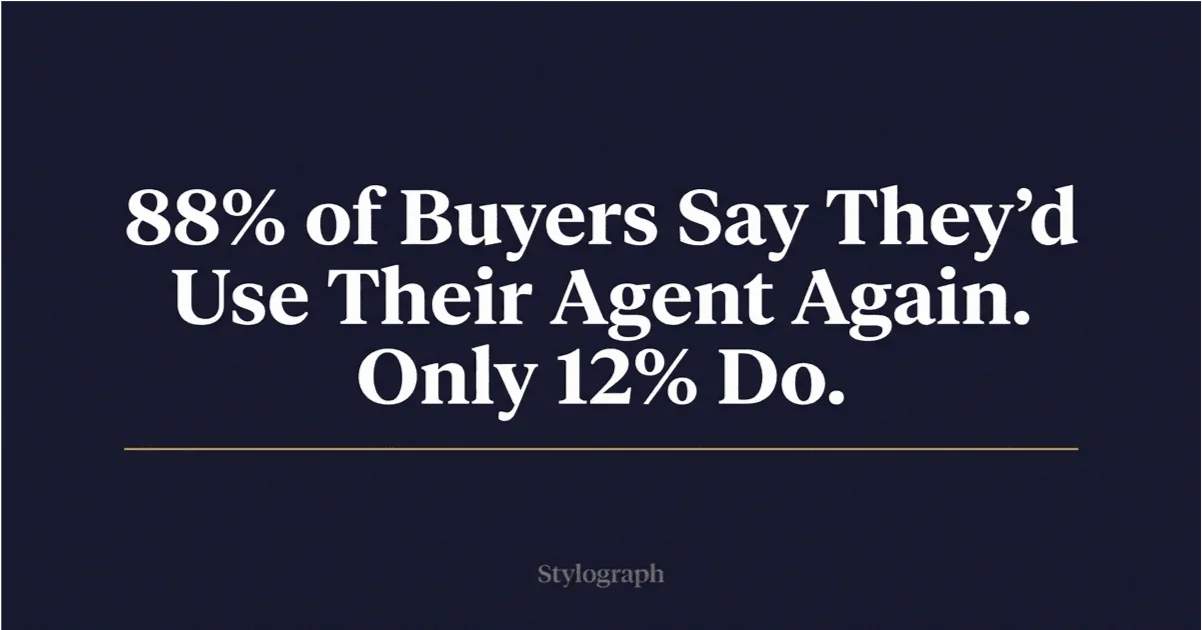
88% of buyers say they would use their agent again. Only 12% actually do. The gap is not caused by bad service. Satisfaction scores are consistently high. The gap is caused by silence. And the silence window has never been longer.
Key Statistics at a Glance
| Metric | Value | Source |
|---|---|---|
| Buyers who’d rehire their agent | 88% | NAR 2025 Profile of Home Buyers & Sellers |
| Sellers who’d recommend their agent | 87% | NAR 2025 |
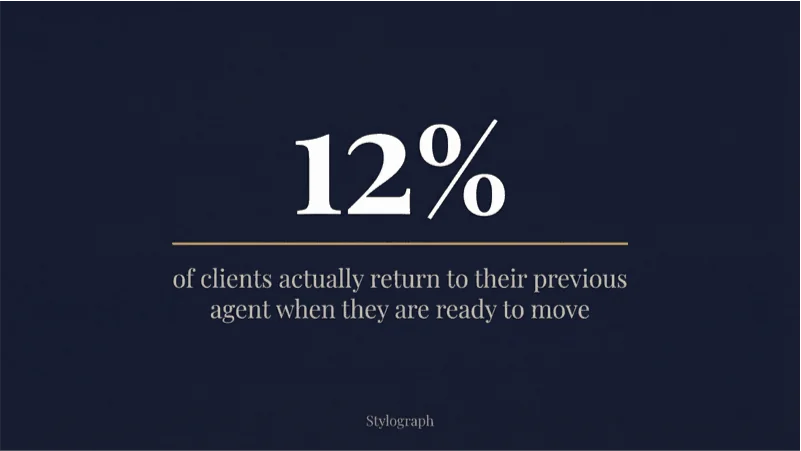
| Clients who actually return to previous agent | 12% | JVM Lending |
| Agents who never contact clients after closing | 91% | Rezora |
| Median US homeowner tenure (2025) | 11 years | NAR 2025 |
| Sellers who interview only one agent | 81% | NAR 2025 |
| Repeat buyers who interview only one agent | 77% | NAR 2025 |
| Average CAC per real estate client | ~$791 | Vena Solutions |
| Cost to acquire vs. retain client | 5-7× higher | Harvard Business Review |
| Profit lift from a 5% retention increase | 25-95% | Harvard Business Review |
| Buyers finding agent through friend/family referral | 40% | NAR 2025 |
Why Do 88% of Buyers Plan to Rehire Their Agent But Only 12% Actually Do?
Because 91% of agents stop contacting clients after closing. Satisfaction is high; presence isn’t. By the time the median 11-year homeowner is ready to sell again, they’ve forgotten their original agent’s name and hired whoever happened to be top of mind.
The real estate industry has a massive intention-action gap. According to NAR’s 2025 Profile of Home Buyers and Sellers, 88% of buyers report they would use their agent again, and 87% of sellers would recommend their agent. Yet industry data consistently shows only 12% of clients actually return to their previous agent when they are ready to move.
These two statistics explain each other: 91% of agents never contact their buyers or sellers after closing. Most meaningful contact dissolves within 1-2 years. By year three, the relationship is effectively over.
The problem is not dissatisfaction. It is disappearance. Clients who were thrilled with your service simply forget your name after years of radio silence. They encounter dozens of other agents at neighborhood gatherings, through social media, via mailers from competing brokers. When they are finally ready to sell, they hire whoever happens to be top-of-mind.
How Long Do Homeowners Wait Before Selling Again?
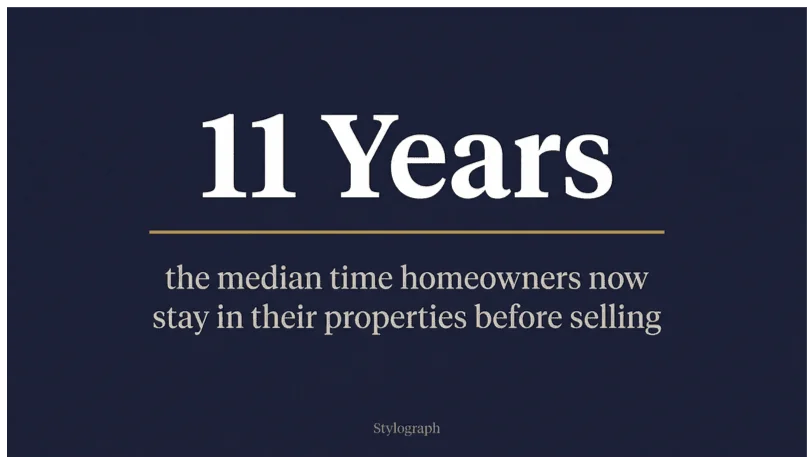
Median US homeowner tenure hit 11 years in 2025, an all-time high. Buyers entering the market in 2025 expect to stay 15 years, with 28% calling their purchase a “forever home.” National average tenure reached 8.55 years in Q4 2025, nearly double the 6-year average from 2000-2008.
Homeowners now stay in their properties a median of 11 years before selling, an all-time high. Buyers entering the market in 2025 expect to stay 15 years, with 28% calling their purchase their “forever home.” National average tenure hit 8.55 years as of Q4 2025, nearly double the 6-year average from 2000-2008.
The post-closing silence window has nearly doubled in two decades. An agent who helped someone buy in 2014 might still have five years before that client is ready to sell, but only if they have maintained contact. An agent who disappeared after closing in 2014 has been forgotten, supplanted by any agent who stayed present during the intervening decade.
This is the uncomfortable math of the modern real estate client retention problem: you can deliver flawless service and still lose the repeat business because you stopped communicating before the relationship had any chance to compound.
How Much Does It Cost to Acquire a New Real Estate Client vs. Retain One?
Acquiring a new real estate client costs roughly $791 on average; retaining an existing one costs 5-7× less. A 5% increase in retention can boost profits between 25% and 95%, per Harvard Business Review’s analysis of customer-lifetime-value math across service industries.
Customer acquisition costs in real estate average roughly $791 per new client. Retaining an existing client costs 5-7 times less than acquiring a new one, and a 5% increase in retention can boost profits 25-95%.
Yet most agents remain trapped on the lead-generation treadmill, spending thousands monthly on Zillow leads, Facebook ads, and cold outreach while their past client database, people who already know, like, and trust them, gathers dust in a CRM they rarely open. (For a concrete example of the ROI math on personal outreach versus digital lead generation, see The $4 Note That Drives $4,000 in Mortgage Referral Revenue.)
Run the numbers on your own database. Say you have 200 past clients and you invest $20 per contact per year in personal follow-up: handwritten notes, home anniversary cards, occasional market updates with real insight. That is $4,000 annually. If that systematic presence retains just three additional transactions that would have otherwise gone to whichever agent happened to be top-of-mind, at an average commission of $8,000 per deal, you generate $24,000 in revenue. A 6x return, and it compounds as the database grows with each new closing.
About half of all firm sales nationwide already come from repeat business and referrals. For agents investing in post-closing client follow-up, that figure climbs to 80%+ of total business. The difference is not talent or market conditions. It is systematic relationship maintenance.
Why Do 81% of Sellers Interview Only One Agent?
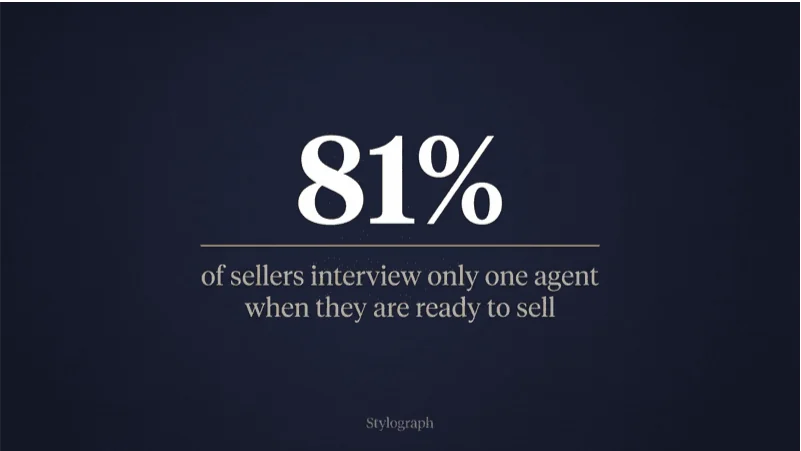
Because buyers and sellers don’t comparison-shop. They call the agent they remember first. Per NAR 2025, 81% of sellers contacted only one agent when they were ready to sell, and 77% of repeat buyers interviewed only one agent. The decision happens before the listing appointment.
Here is the most actionable insight in all the NAR data: 81% of sellers contacted only one agent when they were ready to sell. Seventy-seven percent of repeat buyers interviewed only one agent.
Buyers and sellers do not comparison-shop. They work with the first agent who comes to mind.
The entire game is being the name that surfaces. Not the best agent. Not the cheapest agent. The remembered agent. When a past client thinks “real estate,” your name needs to appear before any other. That requires presence during the years between transactions, years when 91% of your competitors have gone silent.
How Often Should Real Estate Agents Follow Up With Past Clients?
Industry consensus points to 12+ touchpoints per year, mixed between automated content (market updates, newsletters) and personal contact (handwritten notes, calls, home anniversary cards). Agents who systematize this kind of post-closing follow-up build businesses where 80%+ of transactions come from past clients and referrals.
Consistent post-closing follow-up does not mean automated drip campaigns. Everyone gets those. Everyone ignores those.
Effective real estate agent referral strategy requires personal touchpoints: home anniversary notes, handwritten check-ins, market updates with actual insight, occasional calls that are not transactional. The agents building compounding businesses target 12+ touchpoints per year, mixing automated content (market updates, newsletters) with genuine personal contact. (For the data on why physical mail outperforms digital outreach in relationship-driven businesses, see Does Handwritten Mail Actually Work?. For real estate teams looking to operationalize this kind of post-closing follow-up at scale, see how Stylograph automates handwritten notes for real estate agents.)
The goal is simple: when that client is ready to move again, or when their neighbor asks for a referral, your name surfaces first. With 40% of buyers finding their agent through a friend, neighbor, or relative, being memorable to past clients is the single highest-ROI activity in the business.
Why Is Real Estate Client Retention More Important in 2026 Than Ever Before?
Three macro shifts have made past-client relationships the highest-return asset on an agent’s book of business. First-time buyers are at a historic low (21% of the market). Median homeowner tenure hit 11 years, up from 6 in 2008. And 1.55 million licensed agents are competing for a shrinking transaction pool. The agents who treat past clients as renewable resources will capture an outsized share of the limited volume.
The stakes are rising. First-time buyers are at a historic low of 21% of the market. Repeat buyers now represent 79% of transactions. Mortgage rate lock-in means fewer transactions overall and longer holds. 1.55 million licensed agents are competing for a shrinking pool of deals.
In this environment, the agents who treat relationships as renewable resources, who invest in real estate repeat business systems, will capture an outsized share of the limited transaction volume. Those trapped on the acquisition treadmill will find their cost per lead rising even as their conversion rates fall. (The same dynamic plays out on the lending side. For how loan officers face an identical relationship gap, see What Loan Officers Get Wrong About Agent Relationships.)
For agents seeking to close the gap between referral intention and actual repeat business, understanding the intersection of agent-lender relationships and the in-house lending referral problem is critical. See our analysis of why only 33% of agents refer to in-house lenders.
FAQ
How often should real estate agents follow up with past clients?
Target 12+ touchpoints per year. Mix automated content (market updates, newsletters) with personal contact (calls, handwritten notes, home anniversary recognition). Most agents dramatically under-contact their past clients, and 91% never reach out at all after closing.
Why don’t buyers use the same real estate agent twice?
Not because of dissatisfaction. 88% say they would use their agent again. The problem is that 91% of agents never contact clients after closing. Over the 11-year median homeownership period, clients simply forget. The agent who stays present wins by default.
What percentage of real estate business comes from referrals?
For agents investing in post-closing relationships, 80%+ of business comes from past clients and sphere. Across the industry, about half of all firm sales come from repeat business and referrals. The agents who systematize follow-up capture an outsized share.
How much does it cost to get a new real estate client vs. keeping one?
Acquiring a new client costs 5-7x more than retaining an existing one. The real estate and financial sectors average roughly $791 in customer acquisition costs per new client. Retention-focused agents build compounding businesses; acquisition-dependent agents start from zero annually.